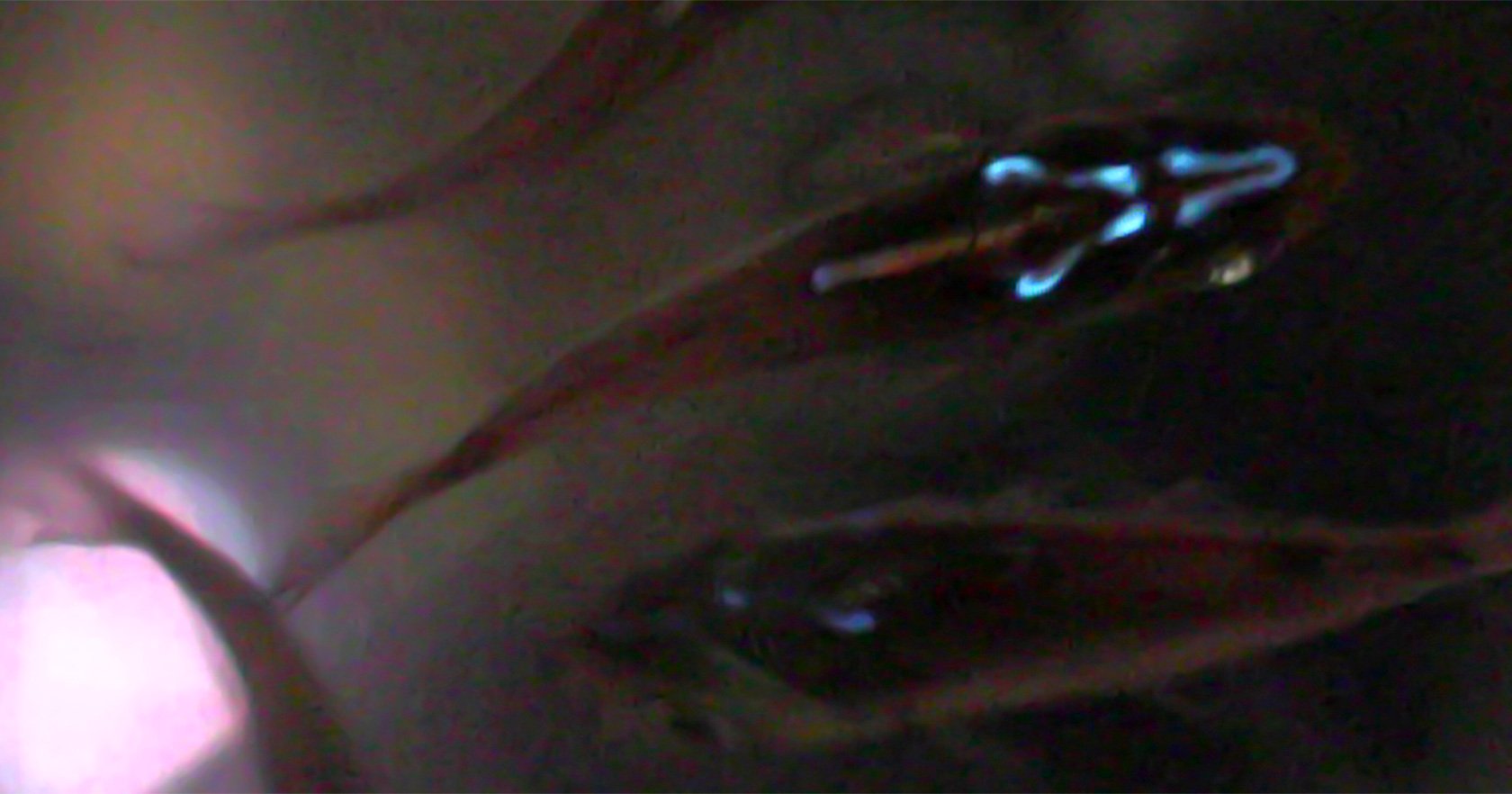
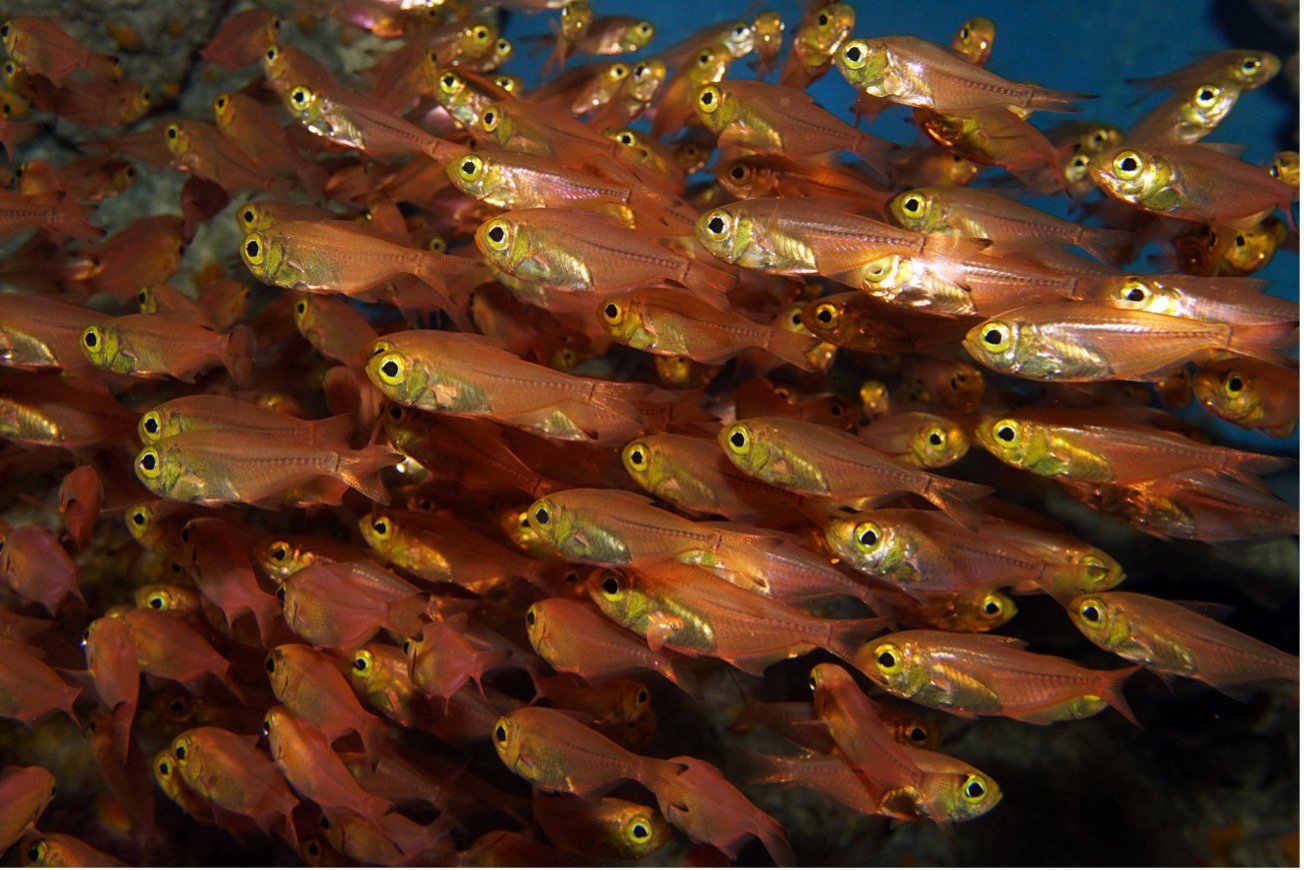
In a striking example of nature's ingenuity, a collaborative research team has revealed that a bioluminescent fish glows not by producing its own light-emitting molecules, but by "stealing" them from its prey.
Through high-quality whole-genome sequencing, the researchers have now conclusively demonstrated that the fish Parapriacanthus ransonneti lacks the gene required to produce luciferase - the enzyme responsible for bioluminescence - confirming a rare biological strategy known as "kleptoproteinism."
Biological functions are typically governed by genes encoded within an organism's genome, forming the basis of the central dogma of molecular biology. However, some organisms are known to acquire and utilize functional components from other organisms, a phenomenon broadly referred to as kleptobiology.
Previously, the research team discovered that Parapriacanthus ransonneti obtains luciferase from bioluminescent ostracods (sea fireflies), which it consumes and uses to emit light.
Yet, without a complete genomic analysis, it remained unclear whether the fish truly lacked the luciferase gene or had acquired it through horizontal gene transfer from its prey.
To resolve this, the team constructed a high-quality draft genome of P. ransonneti using the latest sequencing technologies. Comprehensive analysis revealed no trace of ostracod-derived luciferase genes, nor any evidence of horizontally transferred genes within the fish's genome.
"These results provide compelling and conclusive evidence that this fish does not possess the genetic blueprint for bioluminescence," said Manabu Bessho-Uehara, Associate Professor at the Frontier Research Institute for Interdisciplinary Sciences (FRIS), Tohoku University. "Instead, it relies entirely on proteins obtained from its prey, representing a truly unique form of biological adaptation."
These findings provide the first definitive genomic proof of kleptoproteinism. Beyond its evolutionary significance, this work opens new avenues for research into how proteins can be ingested, protected from digestion, and retained in a functional state - insights that may ultimately contribute to the development of innovative drug delivery systems for oral therapeutics.
Details of the findings were published in the journal Scientific Reports on April 1, 2026.
- Publication Details:
Title: Absence of the luciferase gene in the genome of the kleptoprotein bioluminescent fish Parapriacanthus ransonneti
Authors: Manabu Bessho-Uehara, Katsushi Yamaguchi, Keita Koeda, Shohei Matsuzaki, Taro Maeda, Shuji Shigenobu
Journal: Scientific Reports

Contact:
Manabu Bessho-Uehara,
Frontier Research Institute for Interdisciplinary Sciences
Email: manabu.bessho.a3 tohoku.ac.jp
Website: https://sites.google.com/view/evoluminescencelab/top