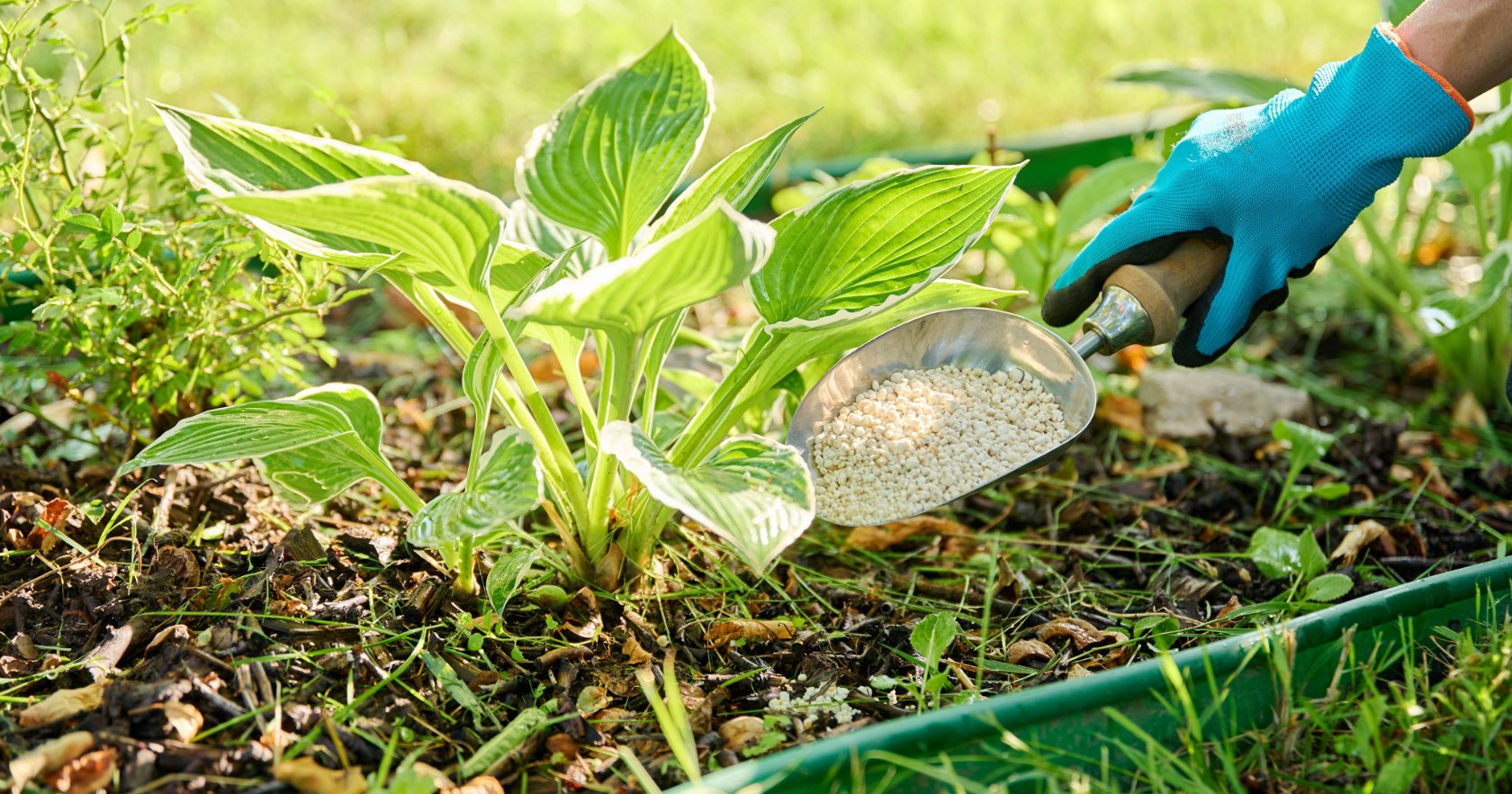
Plastic waste is one of the world's fastest-growing environmental problems. According to the Organisation for Economic Co-operation and Development's Global Plastics Outlook: Policy Scenarios to 2060 report, global plastic use is projected to nearly triple from 460 million metric tons in 2019 to 1.2 billion metric tons by 2060, if current trends continue. Our current approaches are struggling to keep pace with the growing volume of plastic waste. What if there was a new approach that could somehow transform all of this garbage into something useful?
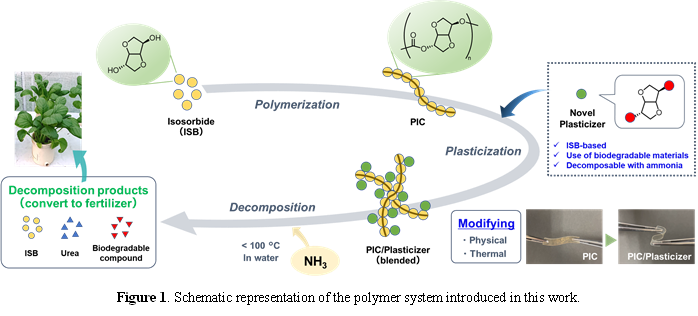
Addressing this challenge, a research team led by Associate Professor Daisuke Aoki from the Graduate School of Engineering, Chiba University, in collaboration with Tohoku University and the University of Tokyo, developed a bio-based plastic that can be converted into fertilizer after use. When treated with aqueous ammonia, a component in the plastic can be chemically converted into isosorbide (ISB) and urea, and the resulting products can be used to support plant growth.
Furthermore, the research team found a way to maximize its potential applications by reducing the hardness and brittleness of the plastic. In a study published in the journal Scientific Reports on August 18, 2026, the team developed a dual-functional, isosorbide-based plasticizer that, when added to poly (isosorbide carbonate) (PIC), makes the plastic softer and over ten times more flexible while preserving its ability to be converted into fertilizer after use.
Importantly, not only the polymer but also the plasticizer can be converted into fertilizer components through ammonia treatment. When the plastic was treated with aqueous ammonia at 90°C for 24 hours, the polymer and plasticizer still successfully broke down.
Traditional biodegradable plastics gradually break down, which means its durability as a product is more limited. In contrast, this material can be used as a conventional plastic without major degradation. You don't have to worry about it suddenly turning into fertilizer - this only happens through ammonia treatment, when the service life of the plastic product is over.
"We are at a critical turning point in the history of plastics. While current strategies like reduction and traditional recycling are important, they are inherently 'passive' and do not offer active environmental benefits. We wanted to move toward an 'active' environmental contribution by designing materials that solve the plastic waste problem while simultaneously addressing resource depletion and supporting sustainable agriculture," says Aoki.
The researchers used the fertilizer produced from the plastic directly, without separation or purification, to successfully grow a model plant, Arabidopsis thaliana, and the edible vegetable komatsuna (a variety of Brassica rapa). The growth of the plants was on par with that achieved using commercial urea fertilizer. The researchers imagine this method could allow the material to be used in flexible products such as agricultural mulch films, seedling pots, plastic bags, and packaging materials.
"These results are promising and could lead to a new generation of plastics that are viewed as a resource rather than waste," says Mizuhiko Nishida (Tohoku University). "We envision a future in which agricultural and domestic plastic waste is routinely recycled."
"We anticipate this research could lead to a fundamental paradigm shift where plastics are no longer viewed as 'waste' but as a valuable resource for food production," adds Aoki.
- Publication Details:
Title: Plastics to fertilizer: a polymer system based on isosorbide as a monomer, plasticizer, and fertilizer
Authors: Shunsuke Fujimata, Yoshiki Tokonami, Raj Kishan Agrahari, Toyokazu Tsutsuba, Kazuaki Rikiyama, Norio Tomotsu, Tatsuo Taniguchi, Takehiro Kamiya, Mizuhiko Nishida, and Daisuke Aoki
Journal: Scientific Reports

Contact:
Media Contact:
Public Relations Office, Graduate School of Agricultural Science,
Tohoku University
Email: agr-koho grp.tohoku.ac.jp
Expert Contact:
Daisuke Aoki
Graduate School of Engineering,
Chiba University
Email: daokichiba-u.jp