
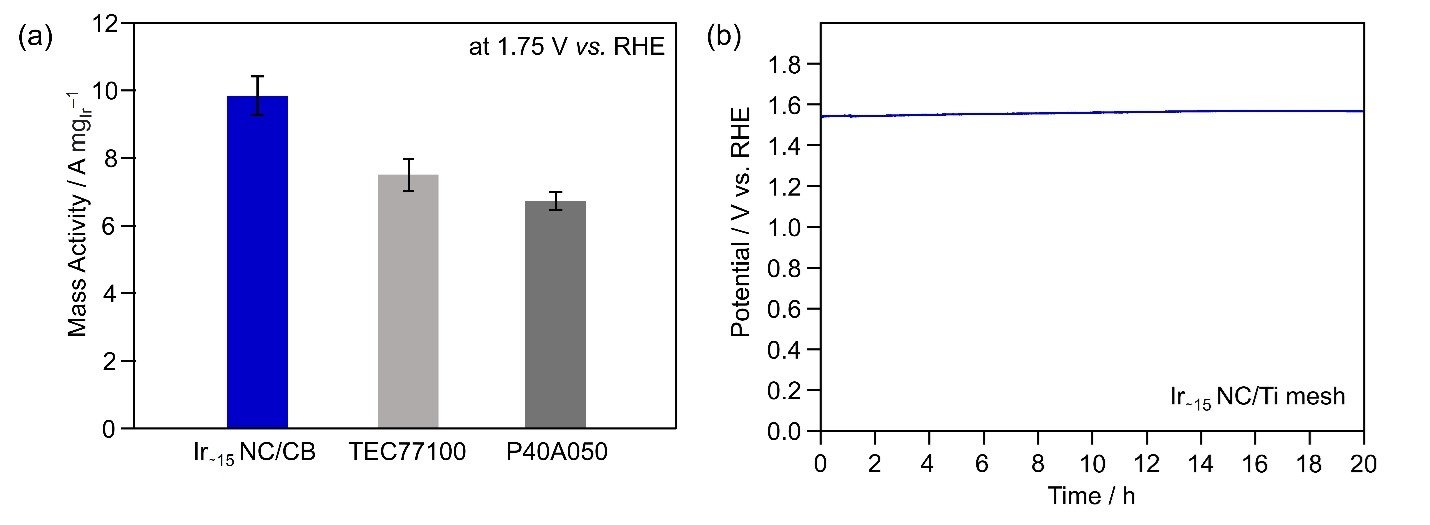
An international research team from Tohoku University, Tokyo University of Science, Vanderbilt University, and the University of Adelaide have discovered a novel, exceptionally simple method to precisely synthesize extremely small Iridium Nanoclusters in ambient air. Such a feat was previously considered highly challenging. In addition, the Nanoclusters outperform conventional, commercially available iridium catalysts by 1.5 times in mass activity, while maintaining sustained operational stability without degradation for over 20 hours. This breakthrough could result in improved production of green hydrogen, which is considered an ultimate clean fuel.
The findings were published in the Journal of the American Chemical Society (JACS) on June 15, 2026.
The Oxygen Evolution Reaction (OER) can create green hydrogen, but the reaction requires so much energy that producing green hydrogen efficiently is a huge challenge. Furthermore, because the reaction takes place in a highly corrosive, strongly acidic environment, iridium (Ir) is virtually the only rare and expensive catalyst capable of enduring it. Consequently, reducing the amount of iridium used while maximizing its reaction activity has become an urgent global objective for the widespread commercialization of water electrolysis systems.
One way to reduce the amount of iridium used is by creating atomically precise metal nanoclusters (NCs), which are tiny aggregates of metal atoms. Downsizing metal particles into ~1-nm nanoclusters exponentially increases their specific surface area and active sites, while allowing the amount of iridium to be reduced to the absolute minimum. However, the downside of increasing the surface area is that iridium (like many metal NCs) become oxidated and thereby unstable when exposed to air.
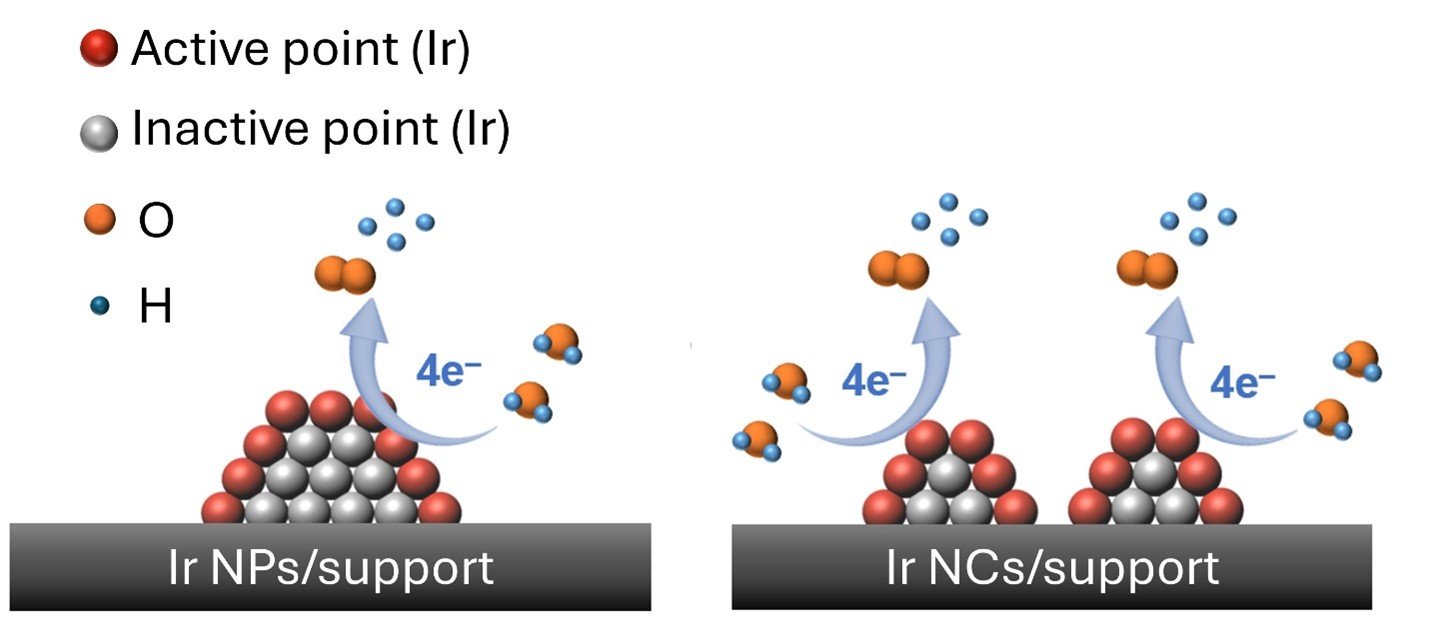
Consequently, the research team sought to overcome this obstacle by devising a novel approach combining the polyol reduction method using ethylene glycol with a ligand-exchange technique. By strategically encapsulating the core of iridium atoms with two distinct types of protective molecules, carbon monoxide (CO) and triphenylphosphine (PPh3), they successfully isolated atomically precise, 15-atom iridium nanoclusters (Ir15 NCs) that remain highly stable and resistant to oxidation, even when synthesized entirely in open air.
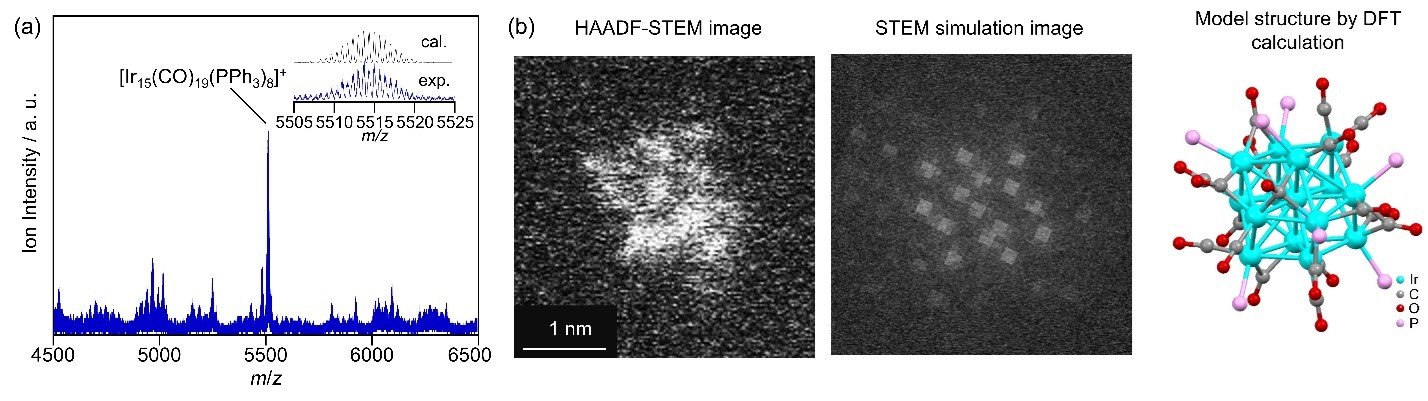
These synthesized Ir15 NCs were effectively dispersed onto a carbon black (CB) support to fabricate a high-performance solid catalyst with an average particle size of a mere 0.9 nm. Electrochemical evaluation revealed a markedly superior performance for the Ir15 NC/CB catalyst. Advanced analyses revealed that the ultra-miniaturization caused the iridium particles to adopt an ideal "cationic state" (a state with a slight electron deficiency), which facilitates the highly efficient adsorption and reaction of intermediates and promotes the Lattice Oxygen Oxidation Mechanism.
"We expect these findings to mark a new milestone in metal nanocluster and green hydrogen research, as it may help us create cost-effective, high-performance metal nanoclusters in order to solve pressing global energy and environmental challenges," says Yuichi Negishi (Tohoku University).
- Publication Details:
Title: Precise Synthesis of ~1-nm Iridium Nanoclusters as a Catalyst for Efficient Oxygen Evolution
Authors: Tokuhisa Kawawaki,Kotaro Sato, Xiaolin Liu, Maho Kamiyama, Yamato Shingyouchi, Masaki Ogami, D. J. Osborn, Gregory F. Metha, De-en Jiang and Yuichi Negishi
Journal: Journal of the American Chemical Society (JACS)
DOI: 10.1021/jacs.6c06563
Contact:
Yuichi Negishi
Institute of Multidisciplinary Research for Advanced Materials
Email: yuichi.negishi.a8 tohoku.ac.jp
Website: https://www2.tagen.tohoku.ac.jp/lab/negishi/html/
Tokuhisa Kawawaki
Institute of Multidisciplinary Research for Advanced Materials
Email: tokuhisa.kawawaki.d8tohoku.ac.jp