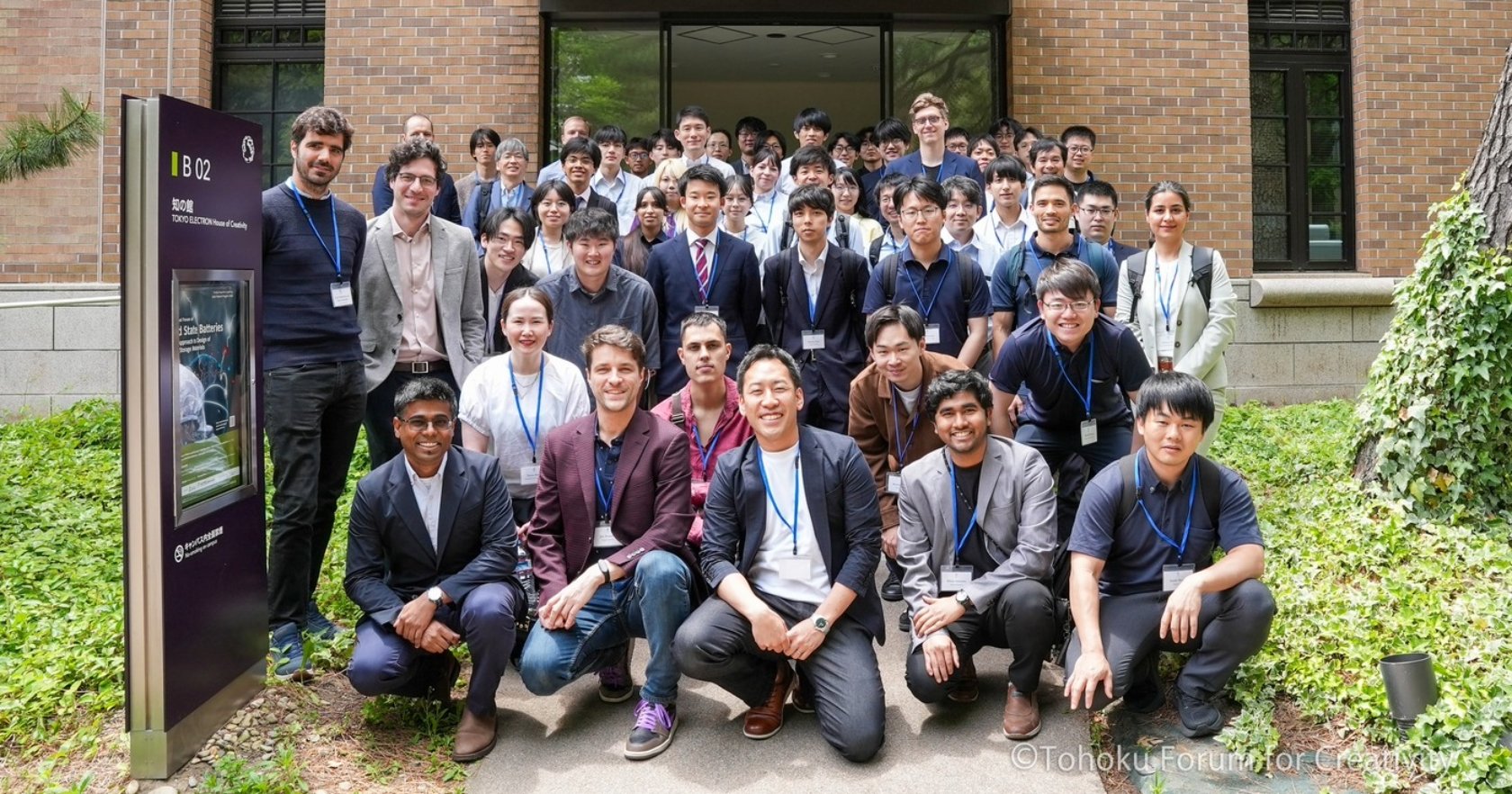
The search for safer, more powerful batteries brought researchers from leading research institutions to Sendai from May 19-21, 2026, for a three-day symposium held at the House of Creativity on Tohoku University's Katahira Campus.
Organized with the support of the Tohoku Forum for Creativity, the event was co-hosted by the Institute of Multidisciplinary Research for Advanced Materials and the Japan Science and Technology Agency (ASPIRE), in cooperation with the University of Münster.
As part of the Tohoku Forum for Creativity Junior Research Program initiative, which supports the development of early-career researchers through international and interdisciplinary exchange, the symposium created valuable opportunities for young researchers to build new international collaborations and exchange ideas across scientific fields.
The event opened with a public lecture by Dr. Prashun Gorai of Rensselaer Polytechnic Institute, whose research focuses on using computational methods to design next-generation energy materials.
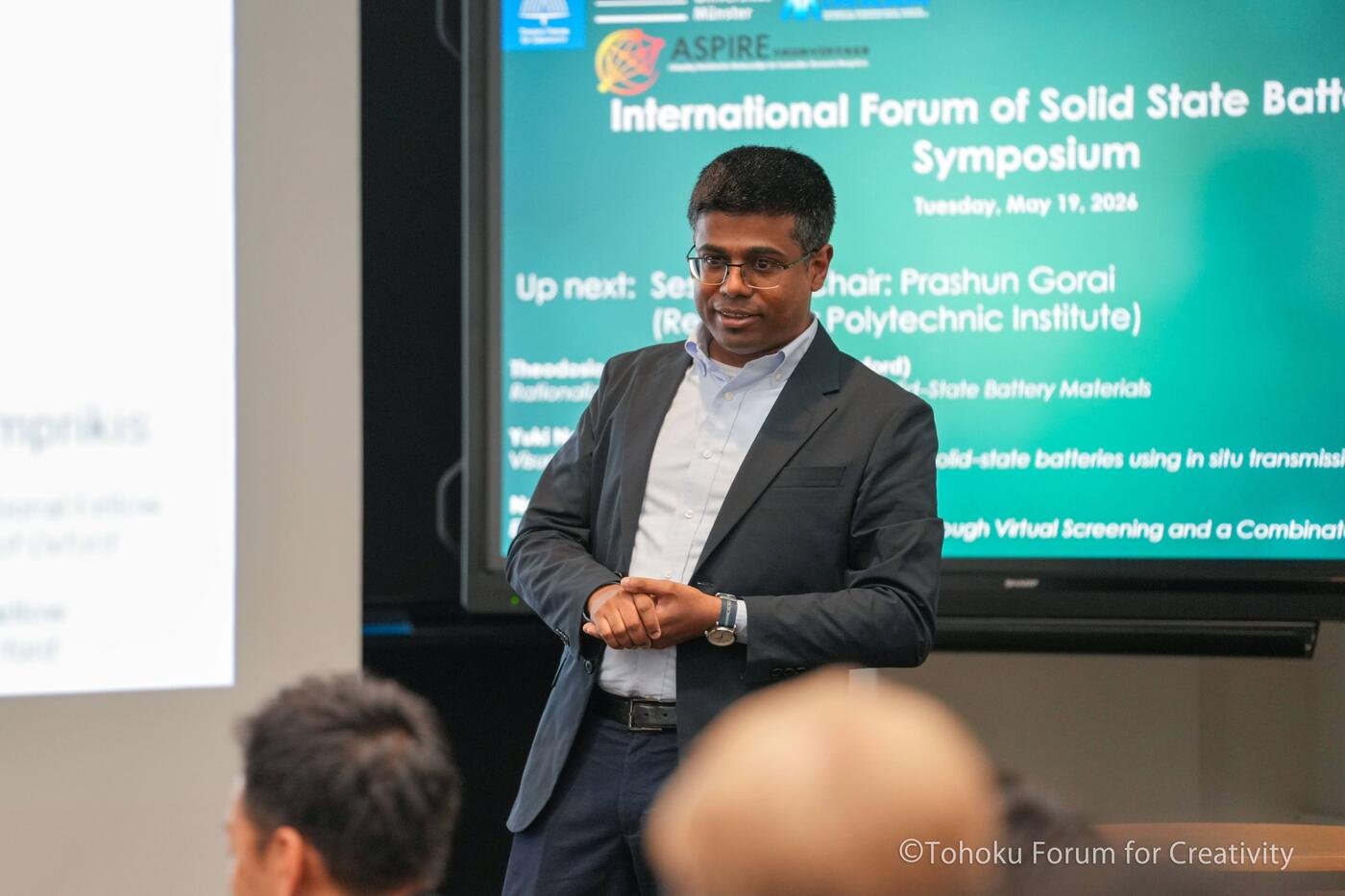
Researchers, students, and members of the public filled the lecture theater to hear how tiny defects and subtle disorder inside materials can dramatically influence the performance and safety of batteries. Quoting Sir Colin Humphreys - "Crystals are like people, it is the defects in them that tend to make them interesting" - Gorai introduced a thought-provoking idea: that the tiny imperfections hidden inside materials, once viewed as obstacles, may instead help researchers design safer, more stable, and more efficient batteries.
The lecture set the tone for the symposium that followed. Over the next three days, scientists from multiple disciplines exchanged ideas on solid-state batteries, and advanced design methods. Discussions continued between lectures and long after the sessions ended, extending into the open lounge spaces of the House of Creativity - exactly the kind of international and interdisciplinary exchange the Junior Research Program was designed to encourage.
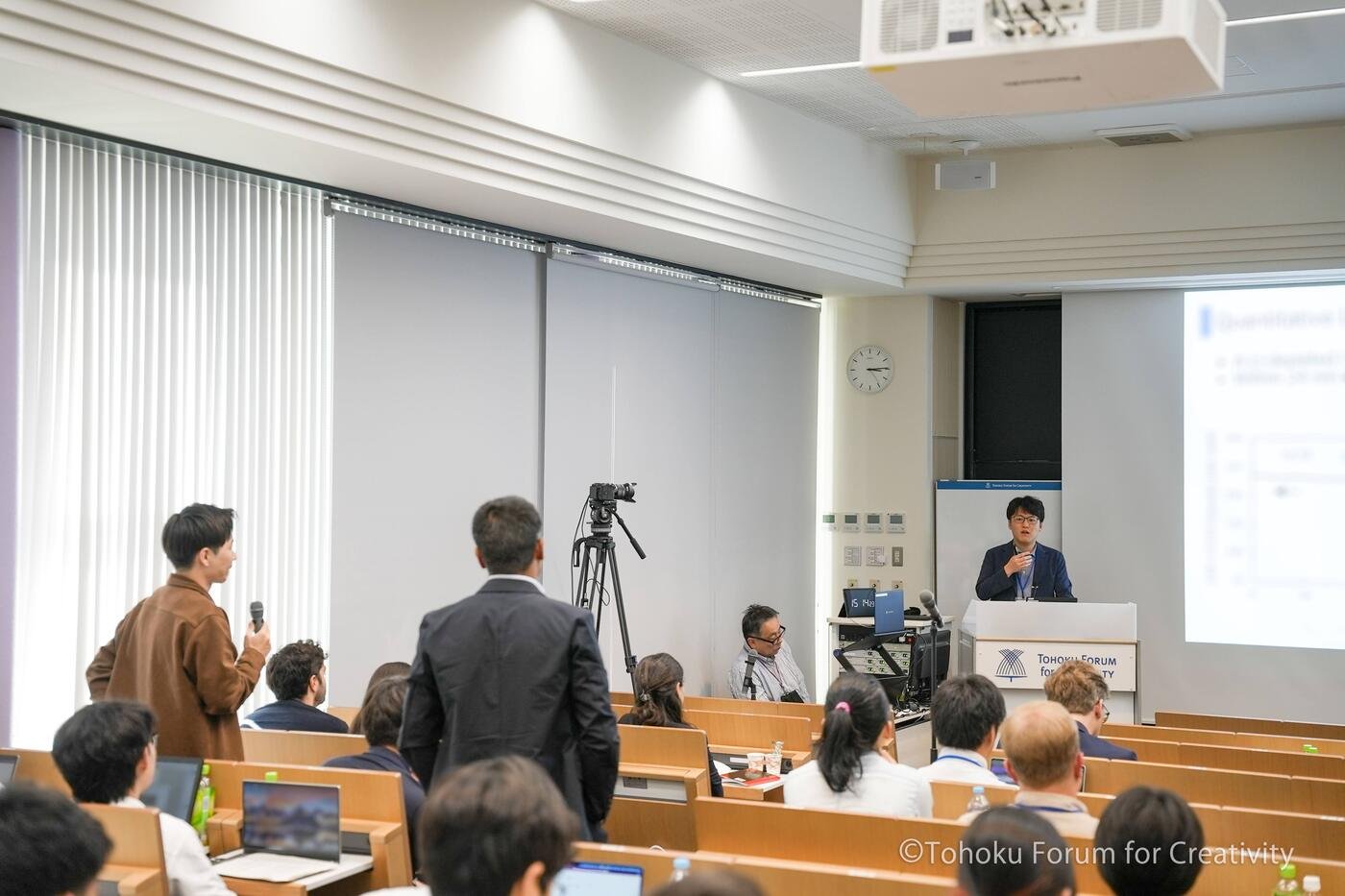
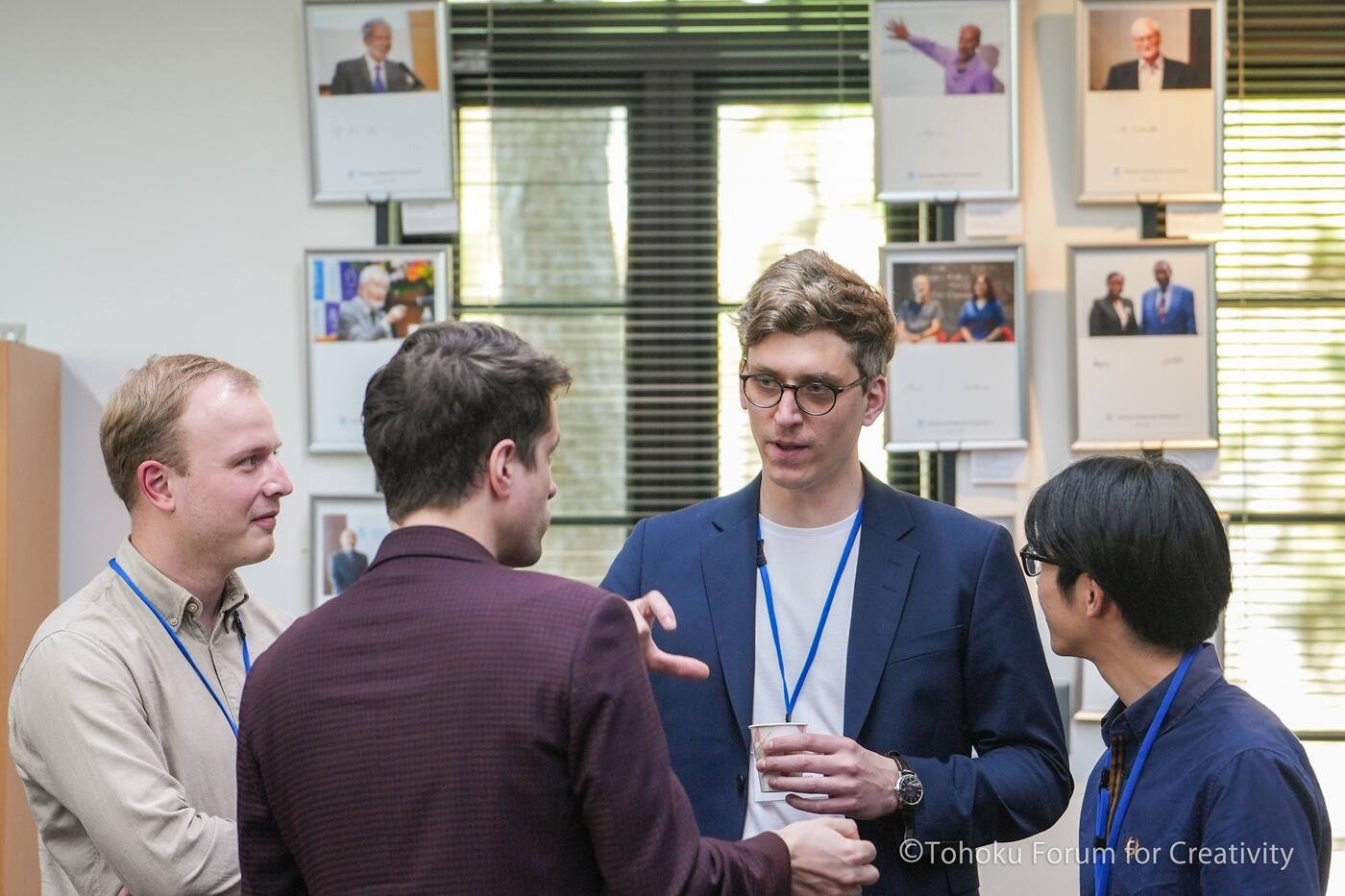
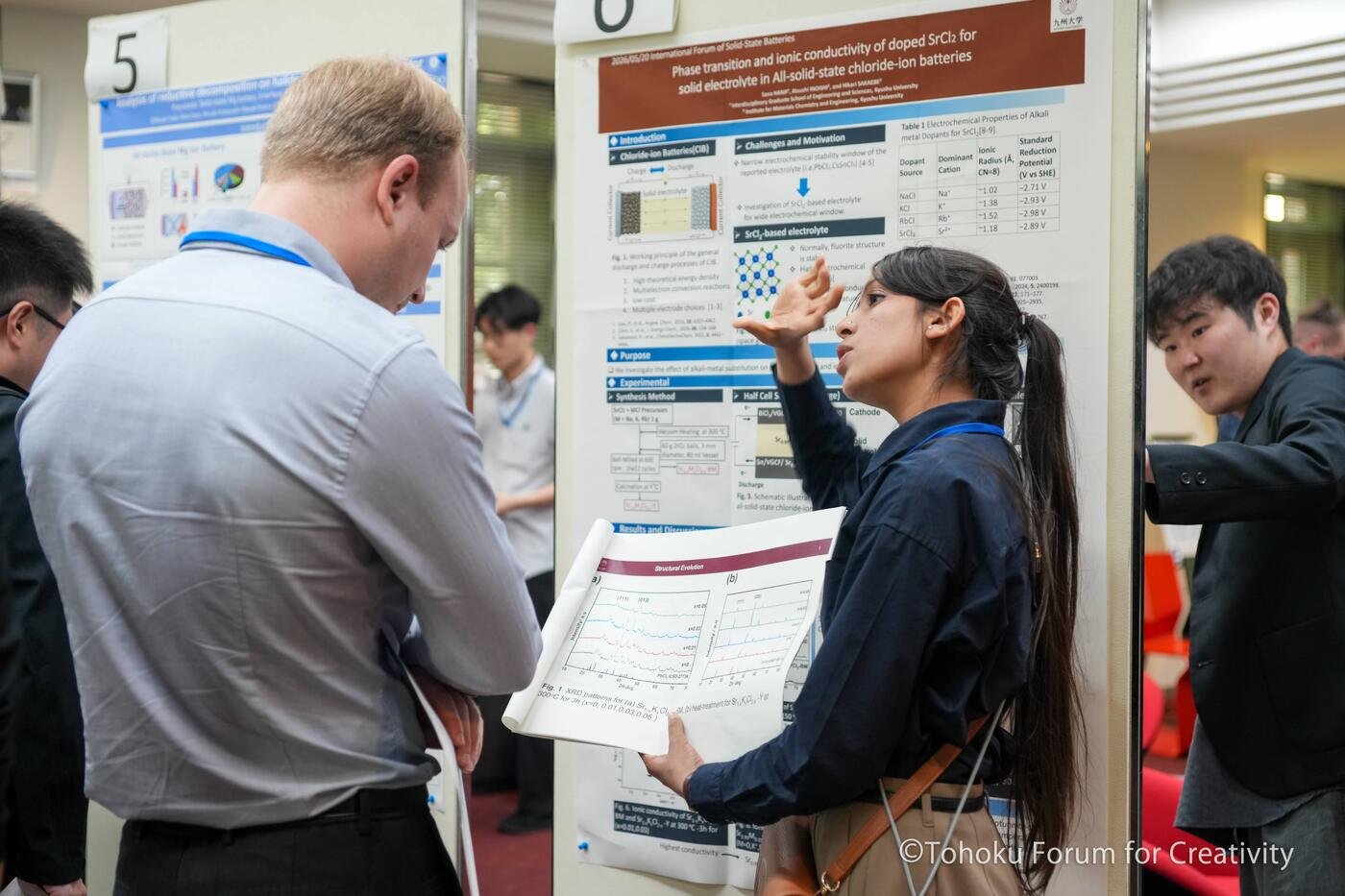
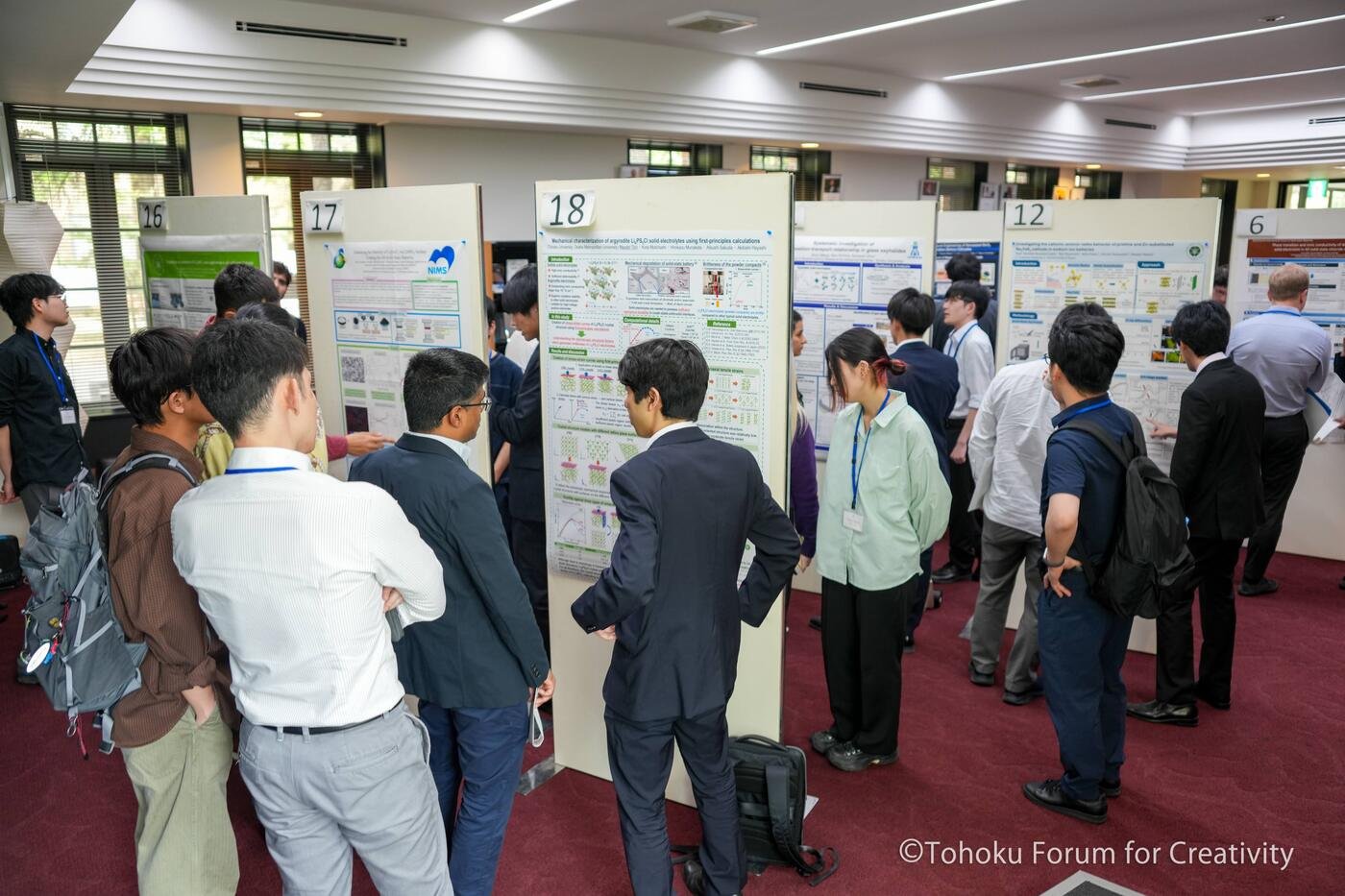
The symposium also included a poster session, giving participants an opportunity to share their research, discuss ideas with fellow attendees, and take part in a poster competition. The session created a lively environment for conversation and feedback, particularly for young researchers presenting their work.
Alongside the scientific discussions, the symposium aimed to create new international connections and encourage future collaboration between researchers working across different fields and institutions. With this spirit in mind, participants also visited Matsushima, famously known as one of the "Three Most Scenic Views of Japan." Surrounded by pine-covered islands and coastal scenery, guests from outside Sendai had an opportunity to continue conversations beyond the lecture hall while experiencing the local culture firsthand.
As the demand for safer and more efficient energy storage continues to grow, the symposium highlighted not only the scientific challenges ahead, but also the importance of bringing researchers together across disciplines, institutions, and borders. Through lectures, open discussion, and cultural exchange, the event created opportunities for new ideas and future collaborations to emerge.
The conversations and connections formed during the three-day event laid the foundation for future collaborations, helping to advance research well beyond the symposium itself.
Contact:
Jan Huebner
Tohoku University
Institute of Multidisciplinary Research for Advanced Materials (IMRAM)
Email: huebner.jan.fryderyk.b6 tohoku.ac.jp