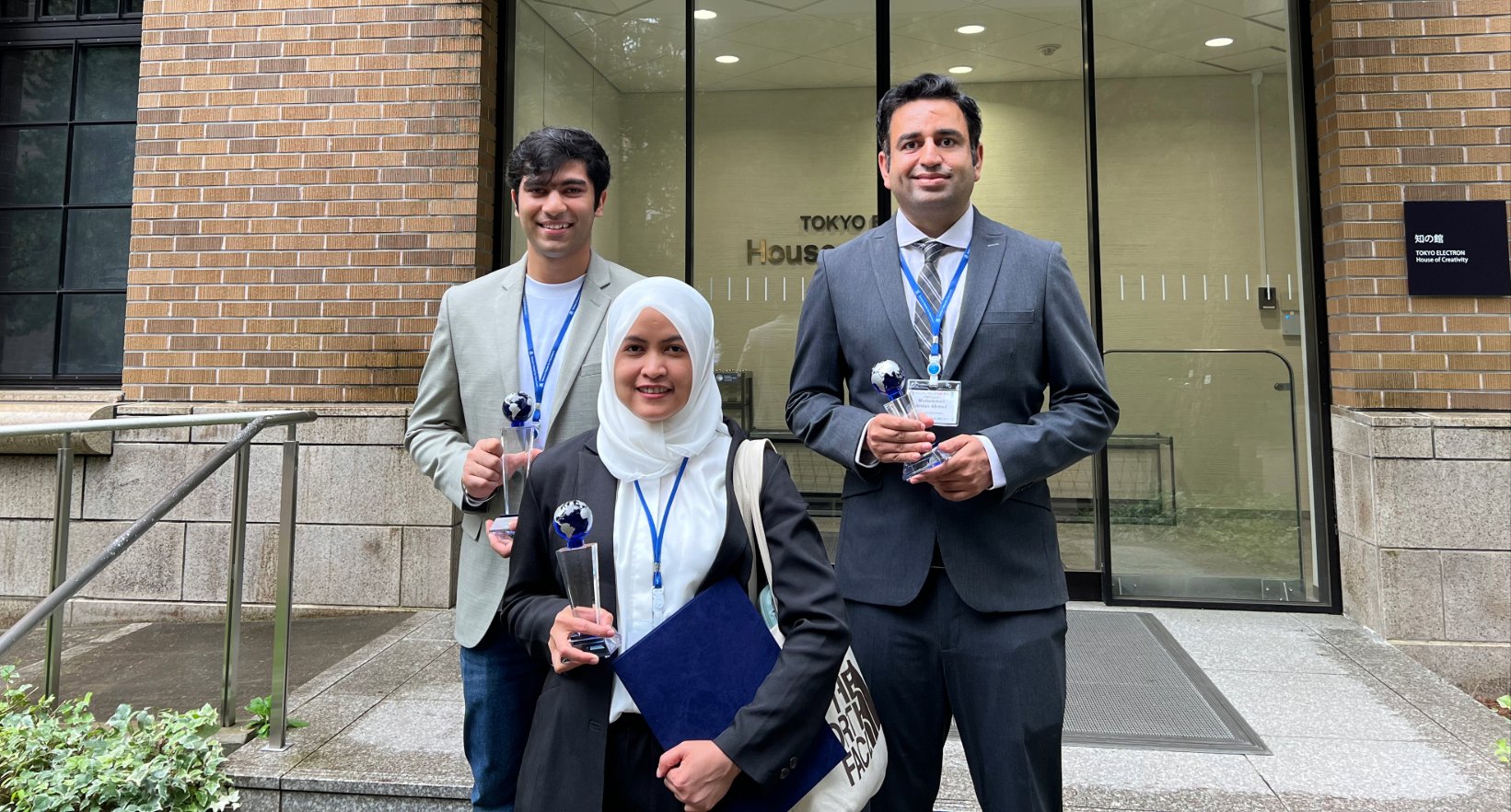
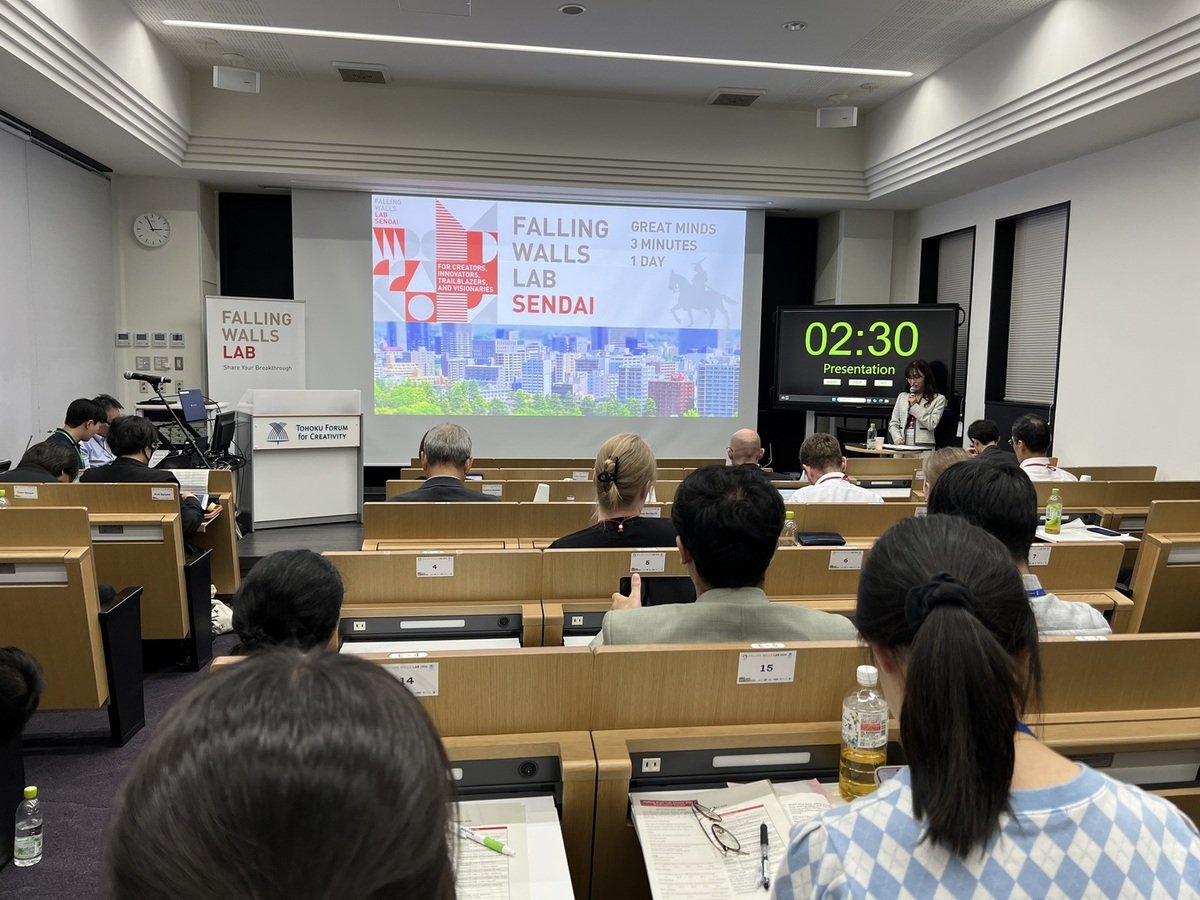
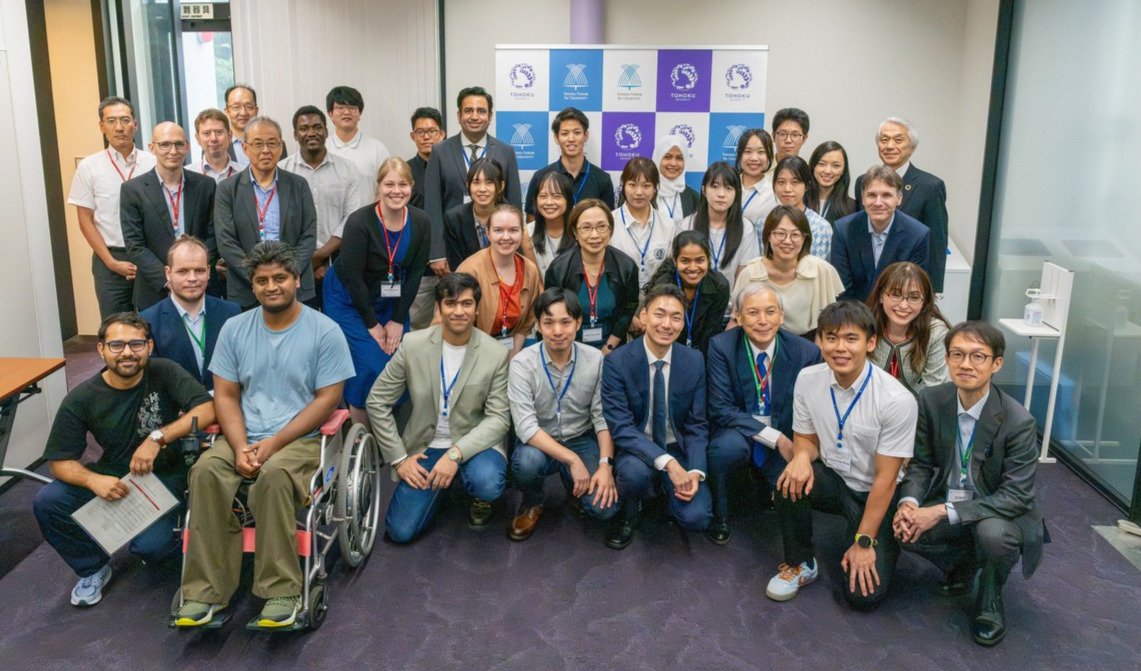
Fifteen early-career researchers and entrepreneurs from institutions around Japan participated in this year's Falling Walls Lab Sendai, held once again at the TOKYO ELECTRON House of Creativity on Katahira Campus on July 31.
This marked the 13th time that Tohoku University hosted the event, which forms part of the wider Falling Walls Conference held annually in Berlin.
Abbhiraj Singh from Kyoto University of Advanced Science took the top prize with his presentation "Breaking the Wall of Brittle Materials via Nanodots."
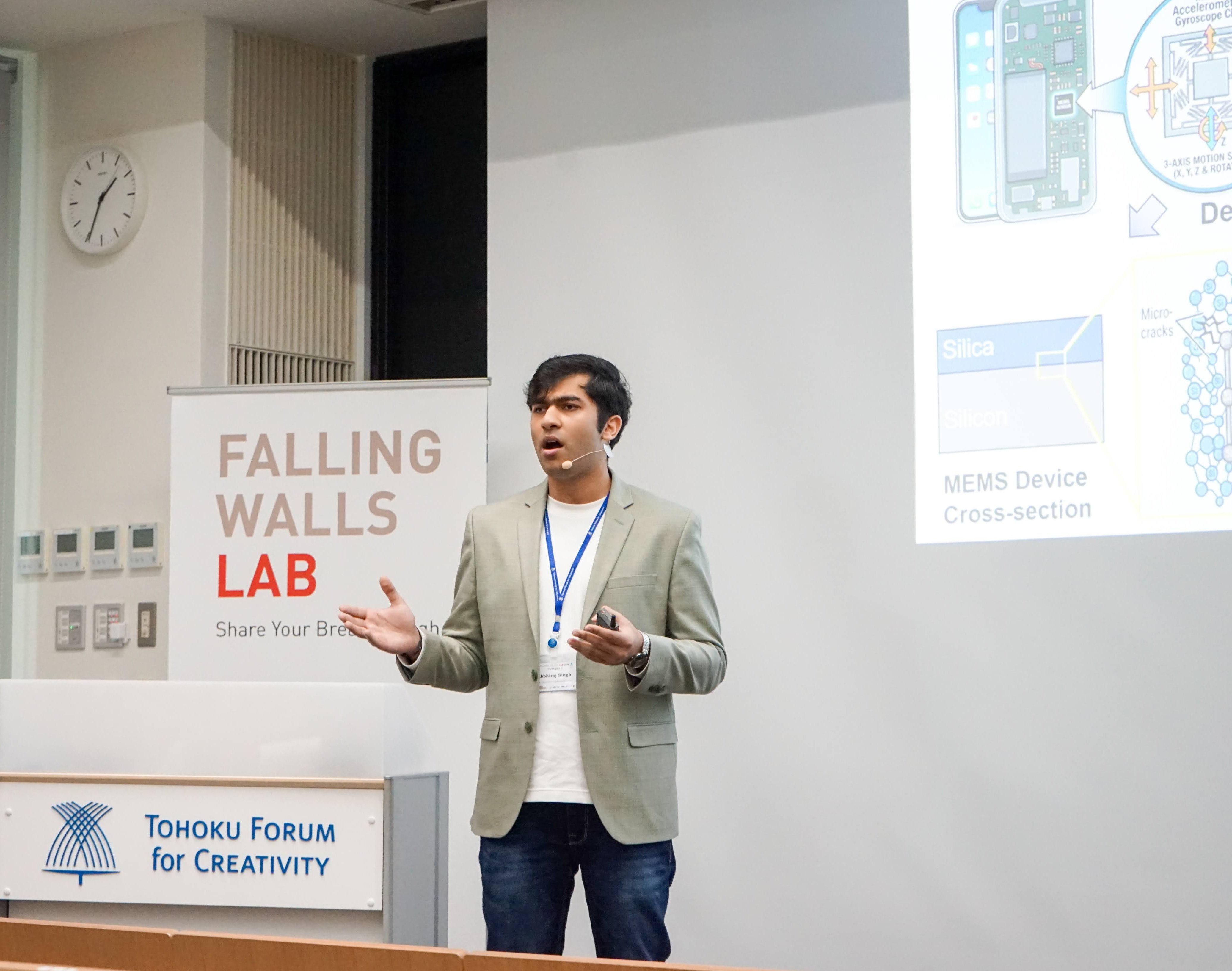
He said that he joined the contest as a challenge to himself. "It is really difficult to compress complex ideas into a short pitch and at the same time, make them relatable to an audience who might not be familiar with topic," he said. "I learnt a lot preparing for this, and I'm sure the insights I've gained will also help me in the future."
In his winning presentation, Singh explained how silicon-based materials used in tiny mechanical systems can crack unpredictably due to manufacturing flaws. His project uses electron-beam technology to place silicon nanodots precisely within an oxide layer, creating a structure that stops microcracks from spreading. The nanodots can also detect strain through a process called electron tunnelling, meaning the approach could deliver smaller, more reliable and energy-efficient components for medical devices and next-generation electronics.
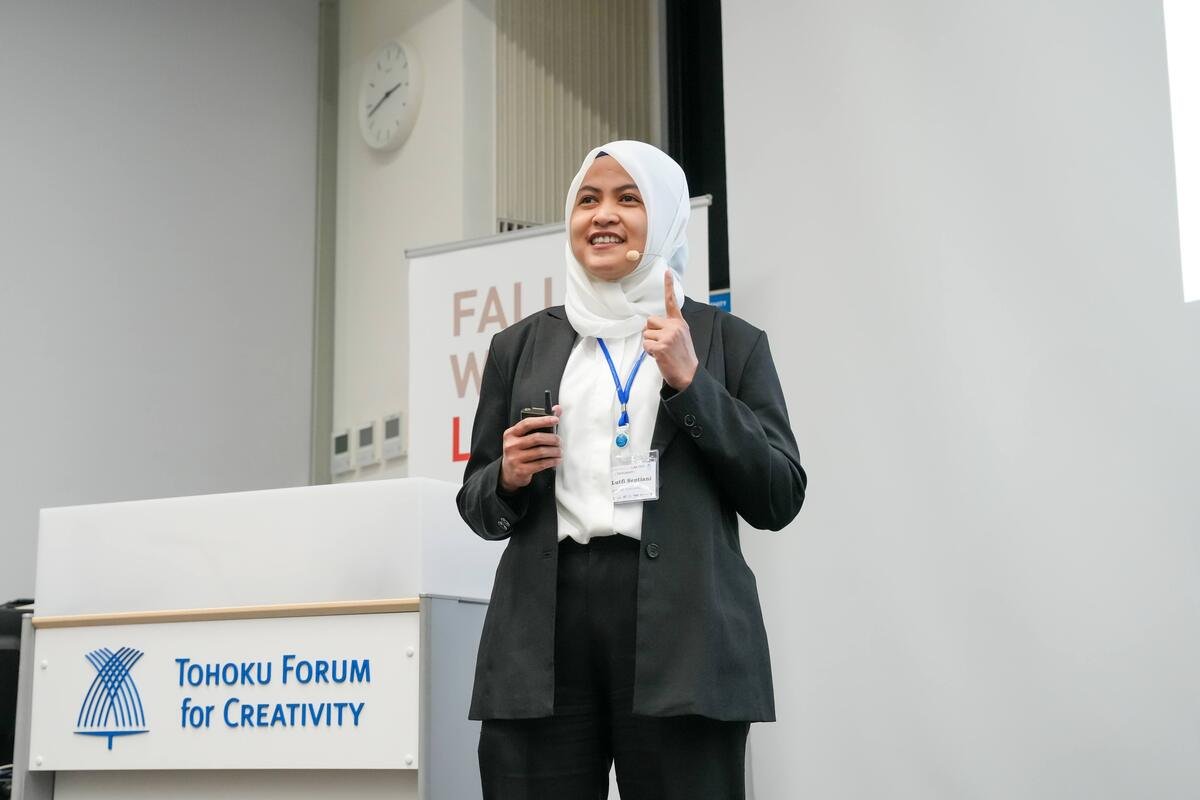
Eka Lutfi Septiani from Hiroshima University came in second with "Breaking the Wall of Overheated Solar Panels," addressing the global need for sustainable clean energy.
She described how solar panels lose efficiency when they overheat, and how current cooling materials tend to compromise either transparency or heat rejection. Her solution is a clear polymer coating containing tiny clusters of silica nanoparticles that let visible light through whilst radiating heat away, all without using any energy. The coating could boost power output, extend panel lifetimes and support cleaner solar energy generation.
She said she hopes to be able to build a new startup with her innovation.
Tohoku University's Muhammad Arslan Ahmad rounded out the podium with his presentation "Breaking the Wall of Endless Repairs."
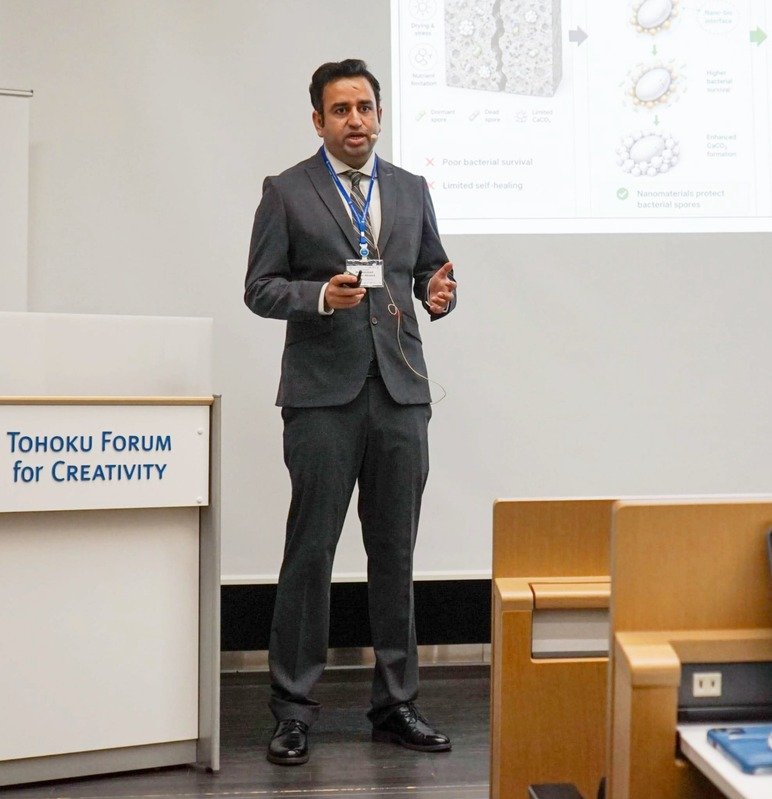
He outlined how cracks in concrete cause deterioration, shorten the lifespan of infrastructure and lead to costly, carbon-intensive repair cycles. His project embeds beneficial bacteria directly into concrete, allowing it to seal cracks autonomously before serious damage occurs. This self-healing approach could extend the life of bridges, tunnels and buildings, cut maintenance costs and emissions, and help create more resilient and sustainable infrastructure worldwide.
"You know, I am very shy and usually avoid public speaking," he said. "So when I saw the poster for Falling Walls Lab, I thought here is my chance to overcome the fear, to face the public and try to share my ideas with other people. And here I am!"
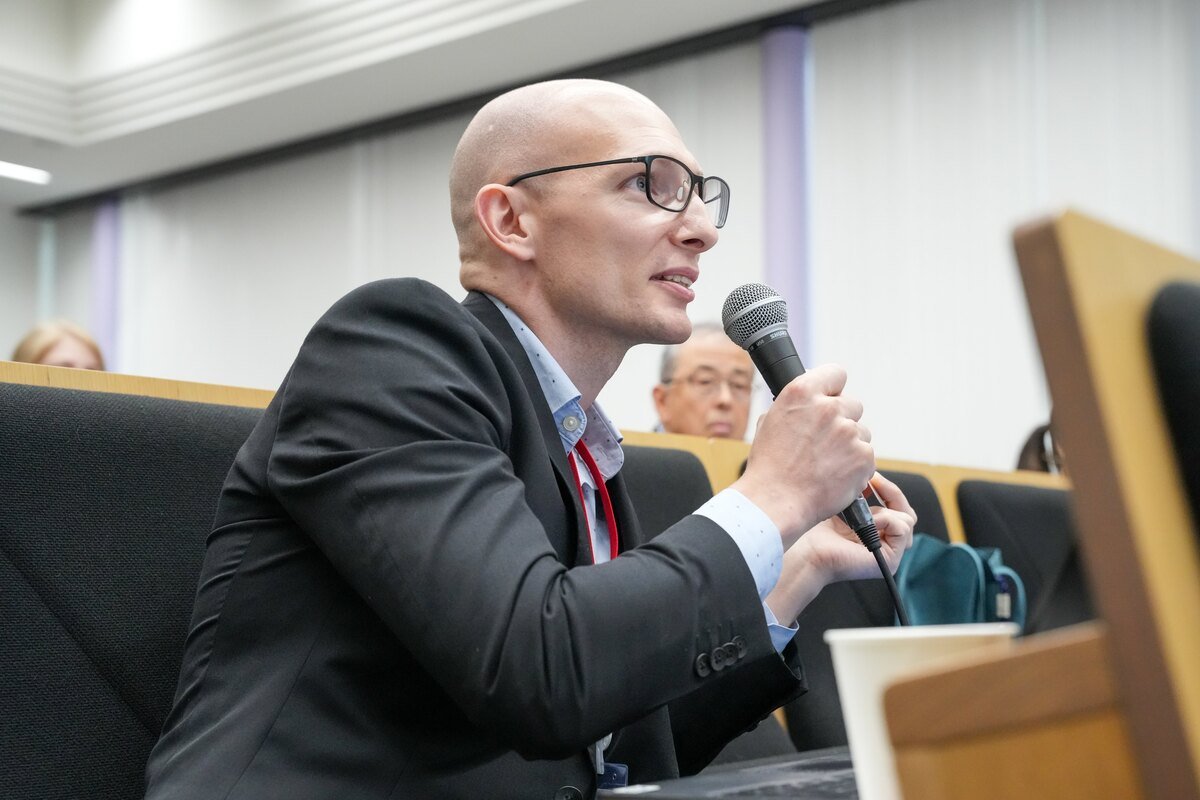
Jury members praised the presentations while encouraging all participants to continue refining their ability to articulate their research clearly and concisely.

"I enjoyed hearing about your research and the passion that you have towards your topics, and I was impressed with the effort that you put into your presentations," said Asako Sugimoto, Tohoku University's Executive Vice President for Research. "This is my 3rd time judging this event and I feel that the level gets higher every year."
Falling Walls Lab, an international competition established in Berlin in 2011, promotes innovative solutions to contemporary problems. Contestants deliver three-minute pitches and answer questions from the jury, being evaluated on their research's "breakthrough factor," social relevance and presentation quality.
As a regional qualifying event, Falling Walls Lab Sendai attracts contestants across Japan and in all disciplines. The winner and runner-up will go to Berlin in November to join the other international winners in the final.

Contact:
Falling Walls Lab Sendai Administration
Tohoku University
Tel: +81 22 217-6091
Email: fwls grp.tohoku.ac.jp