
Curing the Incurable
As a researcher, there are many times where things don’t go according to plan, which makes these rare moments of scientific breakthrough even more special.
Please tell me a bit about your research.
My research specialty is diabetes, which is a disease that causes abnormal glucose or blood sugar levels. Patients with diabetes unfortunately have no choice but to take medicine for their entire lives to stay healthy. This truly surprised me when I first found out as a medical student. I thought to myself “is there really no cure?”. Our lab focuses on studying the interplay between the liver, the pancreas, and the brain with the hopes of one day being able to find a cure for diabetes.
The way all these systems in the body are connected is fascinating. Can you tell me how you went about finding the right target in this pathway?
All these systems are intricately interconnected, therefore each part needs to be considered in order to find a way to restore functional blood sugar levels. After all, homeostasis or equilibrium in the body can only be maintained if everything is communicating properly. We focused on a neural signaling relay connecting the liver, brain, and pancreas that is activated in response to obesity, which makes the insulin-producing beta cells in the pancreas both increase in number and efficiency. We decided to interfere where the vagal nerve communicates with the pancreatic beta cells, since it is one of the last steps in this process. This normalizes blood glucose levels in diabetic mouse models, so we hope to take advantage of this pathway and use it as a treatment for diabetes. We are currently studying this treatment option in mice, and our goal is to move on to a human clinical trial one day.
Why did you choose to become both a doctor and a researcher?
I originally became a doctor with the goal of doing something good for the world, like helping patients. However, while I was in medical school, I noticed many knowledge gaps in our current understanding of certain diseases and how to treat them. To truly help patients, I had to do my own research to fill in these gaps.
SiRIUS has a system that lets clinician-scientists focus on their research – can you explain how this works?
For most doctors, even if we want to conduct research, there just isn’t enough time. Our clinical work and even paperwork after patients are gone takes up most of our time. It’s a big problem in our field. The goal of SiRIUS is to gather clinician-scientists who are passionate about research, and provide them with an environment to focus almost purely on research for six years. For example, now I only practice at the outpatient clinic of Tohoku University Hospital once a week to continue monitoring my regular patients.
Image courtesy of Tohoku University and Studio Xxingham

Image courtesy of Tohoku University and Studio Xxingham
What is something unique about your research that no other lab is doing?
The technique we use to stimulate just the vagal nerves that innervate the pancreas without stimulating all of them at once is rather unique. We have the cross-department collaborations we fostered with the Neuroscience department to thank for learning this precise targeting.
What is the most fun part of your job?
The best part of my job is the moment I get unexpectedly good research results. I get so excited, I can barely sleep afterwards (laughs). Thoughts like “I wonder what kind of experiments I should run tomorrow” and “I hope this can be used by patients soon” start racing through my head. As a researcher, there are many times where things don’t go according to plan, which makes these rare moments of scientific breakthrough even more special.
What is the most difficult part of your job?
You must constantly stay up to date with the latest research to learn about cutting-edge techniques. As much as I love reading about new innovations, the pace of discovery is sometimes too fast to keep up with!
What do you like to do in your spare time?
I prioritize having a good work-life balance overall so that I don’t spend too many late nights in the lab. During my time off I love to play with my kids, watch movies and read manga. Family time is very important to me.
Photograph: A fiber-optic cable used for shining near-infrared light into a mouse's body to wirelessly stimulate the pancreatic vagus nerve, increasing beta cell number and insulin release.
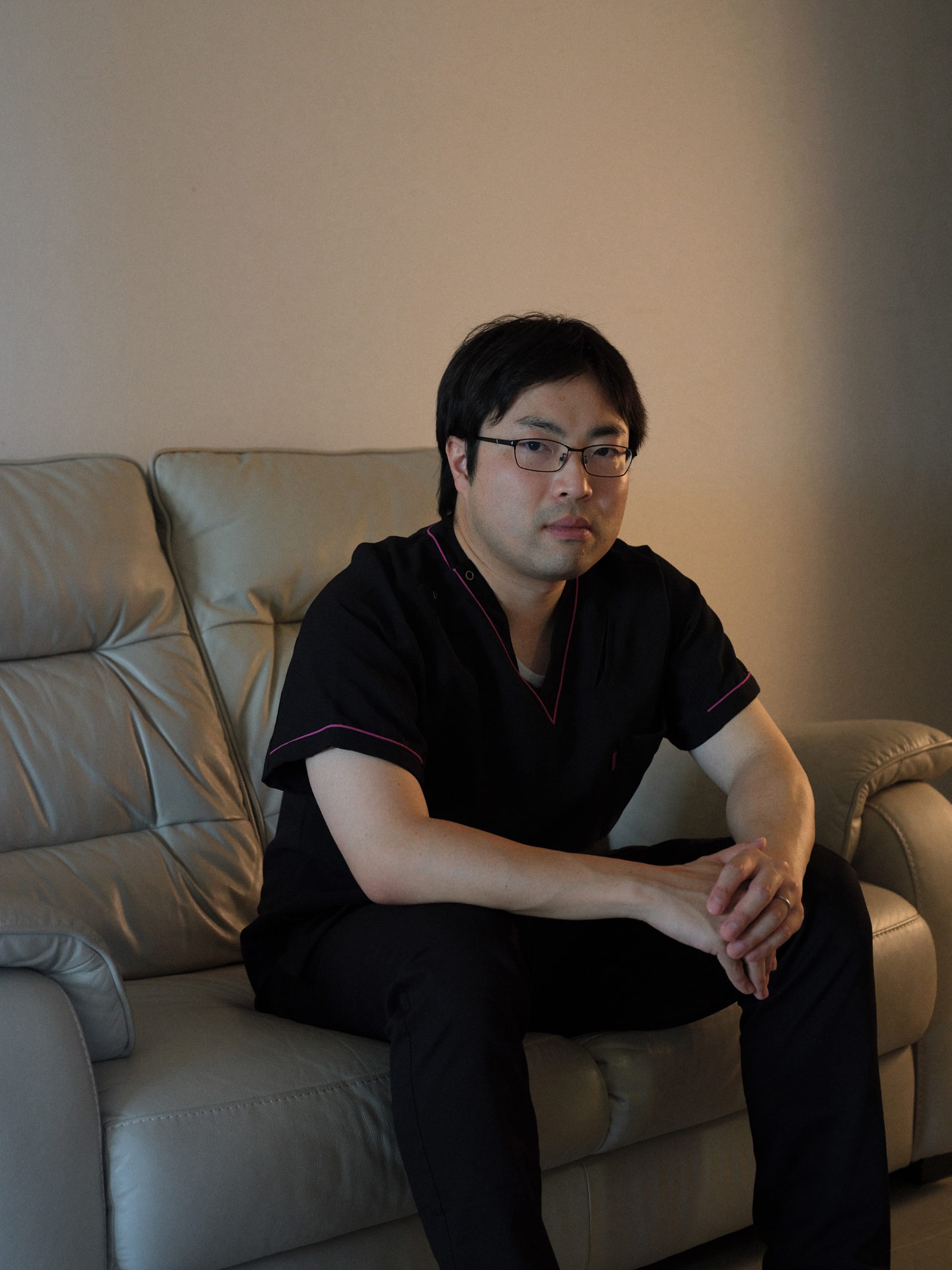
Dr. Yohei Kawana has achieved the ambitious goal of helping patients as both a medical doctor and biomedical researcher. Juggling time between patients, students, and subjects in the lab is part of his usual routine. He currently works at the SiRIUS Institute of Medical Research, which allows clinician-scientists a six year period to lock in and focus on research. This freedom allows him to study the complex systems that link obesity, the pancreas, the liver, and the brain together, in order to better understand what causes diabetes – and how to intervene. His lab’s “bench to bedside” approach aims to develop and rigorously test promising new treatments in mice models, so that they can one day be used in a clinical setting. Dr. Kawana has been a part of Tohoku University starting from his medical degree and all throughout graduate school. He is living proof that with determination, you can achieve more than one dream.

Romance
of
Research