The
Romance
of
Research
Kimi
Akai
Associate Professor
Department of Innovative Japanese Studies, Graduate School of Arts and Letters, Tohoku University
Field of Specialty:
Japanese theatre and performing arts
Specific Topics:
Kabuki and Shinpa Theatre
Theatrical adaptation of literary works
Bridging Japanese literature and theatre
Media Mixing

All the World’s
a Stage
Theatre and literature are mirrors that reflect the era in which they were created. Everything about how people lived, felt and experienced life at that time is embedded within these books and plays.
Please tell me about your research.
I research the intersection between Japanese theatre and literature from the Edo period through the modern era to contemporary works today. My focus specifically is on theatrical forms known as Kabuki and Shinpa, which are popular forms of commercial theatre that attract large audiences. I study media mixes and the practice of adapting literary works for the stage. In recent years, I have also been researching modern Japanese theater - known as “Shin-geki” - as well as radio and television broadcasting.
What is the key to understanding and appreciating Japanese theatre?
It's true that older theatre and literature can feel distant and it is easy to dismiss them as irrelevant. But theatre and literature are mirrors that reflect the era in which they were created. Everything about how people lived, felt and experienced life at that time is embedded within these books and plays.
When you try to relate to that on a personal level, you'll find that some of it feels surprisingly close to home. I think that's what culture is about. It allows us to resonate with people far removed from us in time, to connect with them, to feel drawn to them, even while there remain things we cannot fully understand.
Can you please explain Shinpa Theatre to those of us unfamiliar with it?
Shinpa is a form of theatre that was born in the Meiji era, influenced by Kabuki. It became popular through the stage adaptations of serialised newspaper novels, and it is precisely this quality that makes Shinpa such a direct mirror of the modern era - the age that began with the Meiji period and beyond. People of that time wept and rejoiced watching it and were utterly captivated by it. So, if you want to understand what moved people during the Meiji, Taisho and Showa eras, Shinpa will tell you. And its influence spread far beyond the stage - it had a profound impact on film and on all manner of cultural forms, including toys and popular songs.
We don't hear about Shinpa theatre as much as Kabuki these days. Why is that?
Kabuki has been around for over 400 years and it’s been a driving force of Japanese cultural life from the Edo period through the Meiji era and beyond. Before cinema, theatre was the primary cultural medium in Japan, and Kabuki was always at the centre of that.
Although it has faced threats to its survival at various points throughout its long history, Kabuki has always adapted to the times, and has survived – sometimes even thrived – thanks to the support of its audiences. In fact, Kabuki has become fashionable again now as many young actors have emerged in recent years!
Image courtesy of Tohoku University and Studio Xxingham

Image courtesy of Tohoku University and Studio Xxingham
How did you get interested in this field of research?
I'm very fond of Japanese television detective dramas. A crime occurs, the mystery is solved and the culprit breaks down in tears and confesses. I have loved that format since I was a child. After that I became fond of novels too, and I read quite a lot of them.
Shinpa and Kabuki are works that also follow established formulae that are easy for the audience to understand. For some reason, they are often dismissed as lowbrow and common by literary and artistic circles. But just look at the number of detective dramas we get season after season, year after year, decade after decade. That's because human beings are drawn to formulae. Shinpa and Kabuki both take established patterns and find ways to bring freshness to them, making something new within a fixed form.
These formulaic works may be looked down upon in some arts circles, but the truth is everyone loves them. I think that’s what really drives me in my research - wanting to show people that the things I enjoy genuinely have great value.
What is your favourite stage work?
Among the Shinpa plays, the one I particularly like is ‘Konjiki Yasha,' (金色夜叉) which means the 'Golden Demon.' It’s a novel written by Ozaki Kōyō that was serialised in a newspaper, then adapted for the Shinpa stage, then made into a film, then turned into a popular song. There is even a bronze statue on the beach at Atami!
This work is the reason I first began my research. Ozaki Kōyō was an enormously popular writer in the Meiji era. When I first set out to research his novel, I realised that far more people knew about 'Konjiki Yasha' from the theatre and film, rather than as a novel. That discovery led me to the fields of media mix and adaptation.
Do you still enjoy the theatre as a means of pure entertainment?
I still enjoy it but the problem is that whenever I watch a performance, I find myself analysing everything. I can't switch off! So rather than Shinpa or Kabuki, I now prefer watching Rakugo and Kodan in my free time. And of course, the police dramas that air every season! I also enjoy spending time with my sons. They are twins in elementary school and I love talking to them. They always have amusing stories and interesting perspectives on things.
Photograph: Pre-war bromide photographs and programme books for Kabuki and Shinpa performances.
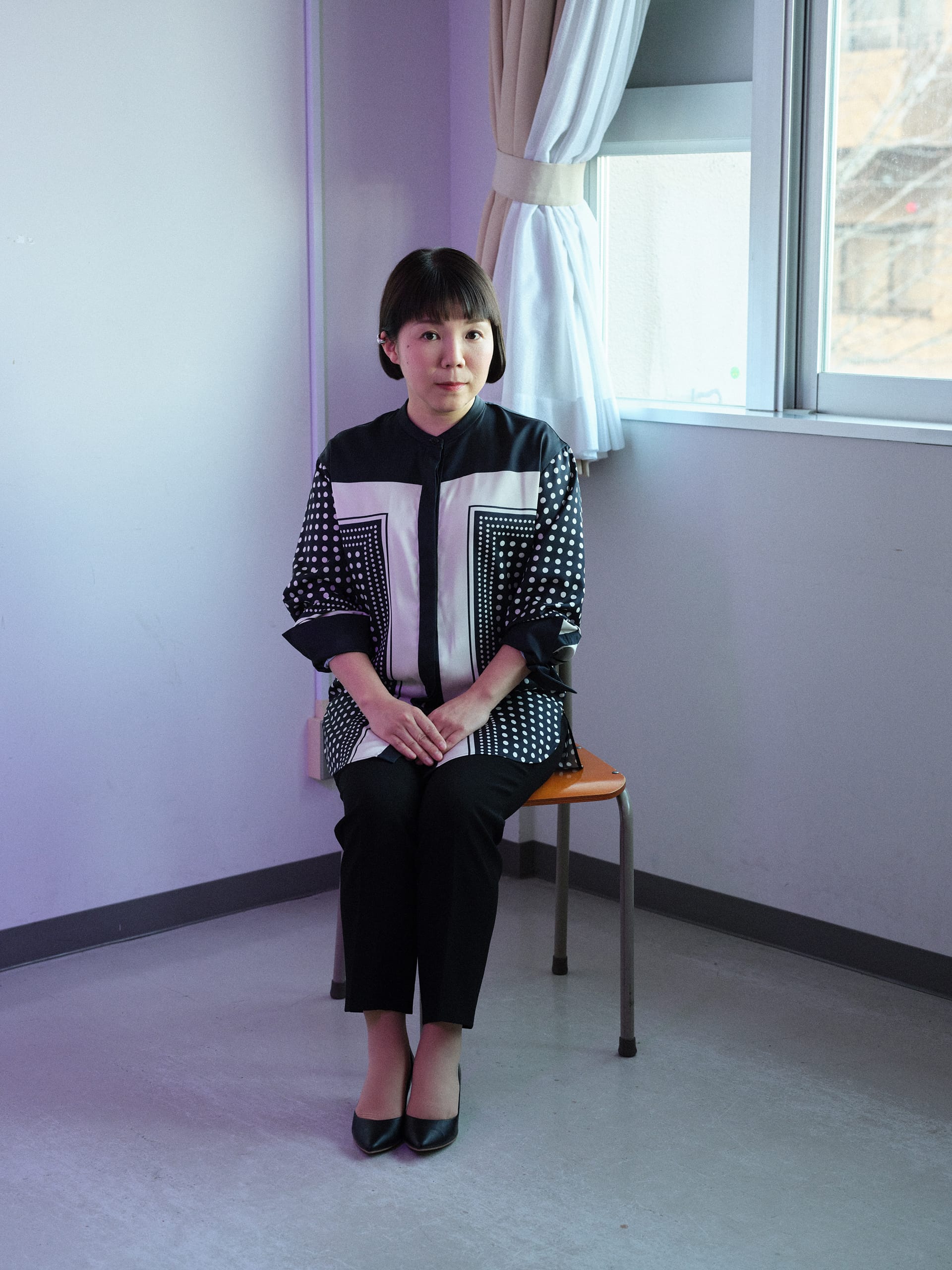
Kimi Akai was born in Gunma Prefecture and spent her childhood living in various cities across Japan (and even Singapore!) due to her father's job at a travel agency. She developed a love for the theatre at a young age when her mother brought her to watch plays, and her grandmother introduced her to Noh. After graduating from Japan Women’s University, she did a doctoral programme in the humanities at Gakushuin University and earned her Ph.D. from Waseda University.
Before joining Tohoku University as an associate professor in 2024, Akai curated exhibitions and specialised in early modern to modern commercial theatre at Waseda University's Tsubouchi Memorial Theatre Museum. She now splits her week between Sendai - where she teaches at Tohoku University’s Department of Innovative Japanese Studies – and Tokyo where her husband and sons live.

Romance
of
Research