
Reading
the Waves
Beyond the technical and engineering results, we are now also better equipped to address the social issues related to disasters.
Tell me about your research.
I specialize in tsunami numerical simulation and risk assessment, which means forecasting the size of a tsunami as well as its damage potential and social impact.
A tsunami can be caused by a large earthquake or a non-seismic source, like the volcanic eruption off Tonga in 2022. We run numerical simulations to understand the mechanism behind such tsunamis when they occur, but we also use simulations to anticipate what might happen in the future. For example, if we know that an earthquake might occur in a certain area, we can run a tsunami simulation, predict the inundation depth and force, and put plans in place that can help prevent casualties and minimize damage.
How often are you in the field?
Our work is mostly simulation-based, but we go out quite often to talk to people, to gather data and feedback. There was an earthquake in Kamchatka last year and although it did not trigger a major inland tsunami, we met with local government officials and asked residents about their awareness of evacuation procedures. We also spoke to local fishermen about the damage to their fishing facilities to see how we could help.
What do you do with the information and feedback you get from locals in affected areas?
For example, when we spoke to fishermen in Kesennuma City and Yamada Town, they told us about oysters and seaweed that float on the sea surface but are held in place by anchored moorings. We ran a tsunami simulation with our newly developed drifting model to help them identify which areas of the bay are high risk. Then we worked out how to provide better protection, either by adding more weight to the anchors or using thicker ropes.
It seems like the field of disaster science has grown a lot since 2011. Are we better prepared for natural hazards?
Yes, I think so, at least in Japan. From an engineering perspective, we have more sensors and have significantly improved our warning systems and infrastructure. Since 2011, we have learned more about cycles and countermeasures, studied tsunamis caused by both seismic and non-seismic sources, and gained a much deeper understanding of the generation mechanisms.
But beyond the technical and engineering results, we are also better equipped to address the social issues related to disasters. In 2023, I spent nine months as a visiting faculty member at University College London. UCL has a department similar to IRIDeS, but with a more humanitarian focus. I had the opportunity to do a project with a professor there who works on gender issues, and we explored ways to combine technical engineering expertise with social, humanitarian implementation.
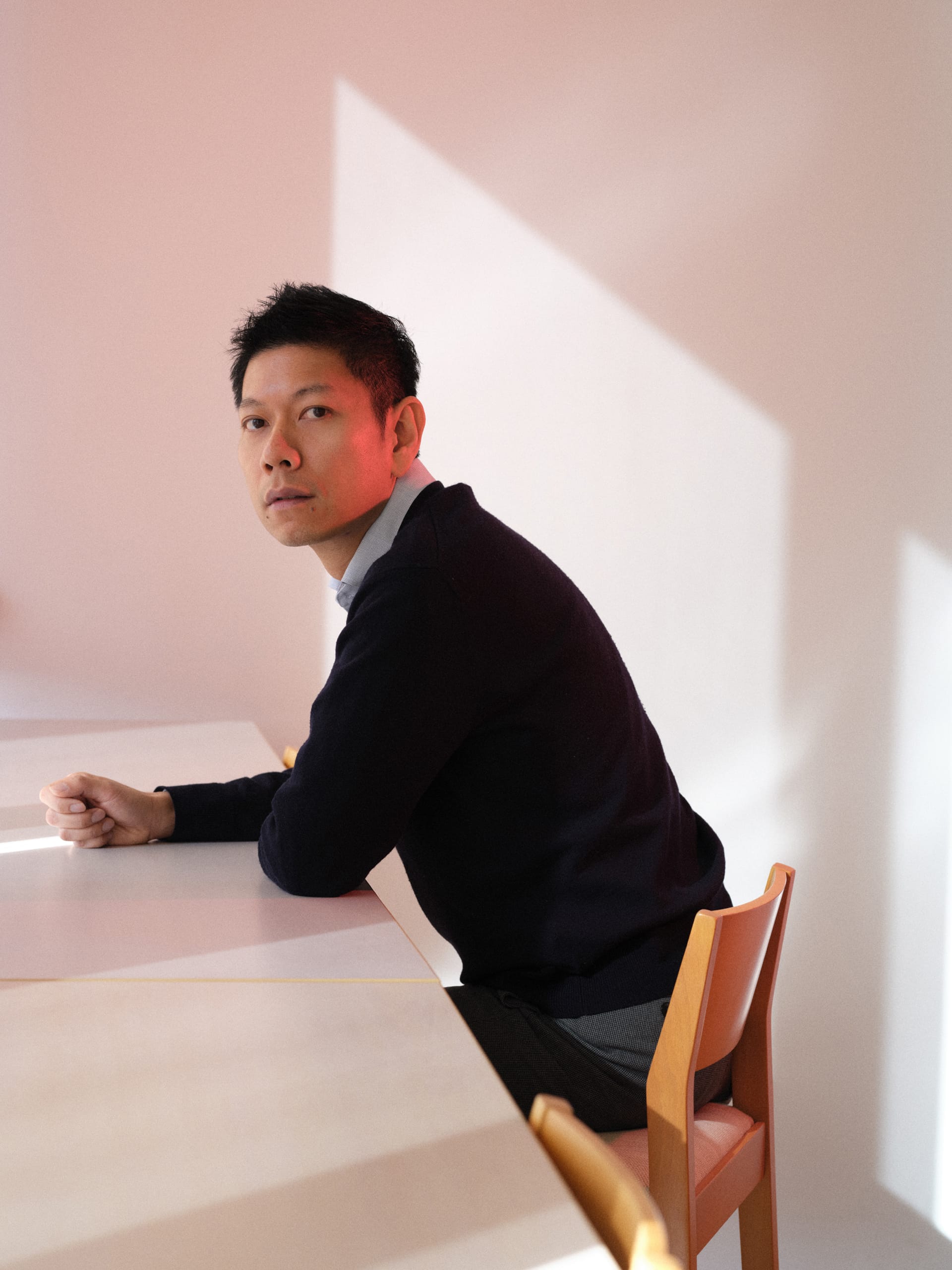
Image courtesy of Tohoku University and Studio Xxingham

Image courtesy of Tohoku University and Studio Xxingham
How did you get interested in tsunami engineering?
I was originally planning to be a civil engineer because I was good at mathematics and physics in high school. Then the 2004 Indian Ocean tsunami happened during the final year of my bachelor’s degree. Many countries were badly affected, including Thailand. Even though I was in Bangkok and the hardest-hit areas were in the south, I saw so many images of destruction on the news. I decided then that I wanted to learn more about tsunamis, so that if another disaster occurred, I could contribute and help my country.
And you were in Sendai in 2011 when the Great East Japan Earthquake and Tsunami happened…
I was a researcher at Tohoku University at that time and the disaster reinforced my decision to focus on tsunami hazards and risk assessment. If the 2011 earthquake and tsunami didn’t happen, I probably would have returned to Thailand and become a civil engineer instead.
Do you still spend much time in Thailand?
Yes, I travel there quite a lot. In 2025, I was there five times after the earthquake in Myanmar. Thailand has many experts in floods but relatively few in earthquakes and tsunami. So, I work with the Embassy of Japan and the JICA office in Bangkok to connect earthquake engineers and disaster science specialists in Thailand and Japan. I often bring Japanese professors to Thailand to visit affected sites and to introduce them to Thai researchers and government officials who need advice or who are looking to collaborate. We also welcome high school students from Thailand to IRIDeS every year.
I know you’re a history buff. Do you still read historical novels?
I love Japanese history and samurai stories. When I was young, I was really into Rurouni Kenshin and other Japanese historical manga. Lately, I’ve been reading Kingdom, a series set during China’s Qin dynasty. I find stories about feudal warfare quite inspiring. When Japanese samurai and Chinese warriors plan their wars, their strategies are very interesting, almost philosophical. I feel like we can learn a lot from the way they think.
What do you do to completely unplug from work?
This will surprise you - I’ve taken up drumming! I’ve always thought that drums were cool. You know how when you work, sometimes you have to multitask to get the best results? In drumming, you have to hit and kick different things at the same time. It’s harder than it looks, but very satisfying! I started learning the drums from scratch a few years ago, and I still go for lessons once a week.
What kind of music do you drum to?
My favorite band is Dream Theater, a progressive metal band from America. I have an electric drum kit at home so when I’m on my own, I put my headphones on and just play!
Photograph: A levelling staff for measuring tsunami traces during field surveys, and disaster education materials in a wrapping cloth and emergency bag for preparation against future disasters.
Anawat Suppasri was born in Bangkok and holds a bachelor’s degree from Chulalongkorn University (2005), a master’s degree from the Asian Institute of Technology (2007) and a Ph.D. in Tsunami Engineering from Tohoku University (2010). He has been with the International Research Institute of Disaster Science (IRIDeS) since its founding in 2012.
Suppasri’s research encompasses tsunami numerical simulation, fragility analysis, early warning systems and disaster mitigation education. He has pioneered innovative approaches to building damage assessment - including load-resistance analysis - and has developed fragility functions for a wide range of structures. His contributions to global tsunami hazard assessment have been recognized by the UNDRR, UNDP and UNITAR.
Suppasri received the Nakasone Yasuhiro Incentive Award in 2018, and in the 2022 Commendation for Science and Technology by Japan’s Minister of Education, Culture, Sports, Science and Technology (MEXT), he was honoured with the Young Scientists’ Award. He was also named a Tohoku University Distinguished Researcher that same year. Suppasri has been consistently ranked in the Stanford/Elsevier World’s Top 2% Scientists list in the single recent year category for the last five years.

Romance
of
Research